

ANIMAC 2026 CLAIMS CHANGE AS A CREATIVE FORCE WITH THE MOTTO “THINGS CHANGE”


Rocío Álvarez’s poster transforms the motto into a visual sequence of evolution
The exhibition consolidates its international reach with 759 entries from 85 countries
The 30th edition of Animac, the International Animated Film Festival of Catalonia organized by the Lleida City Council, presents the motto and poster that will define the 2026 edition, scheduled for February 19 to 22. Under the motto “Things Change”, the exhibition proposes a reflection on change as an essential element of animation and the contemporary world.
According to the director of Animac, Carolina López, “animation is an art built on transformation. Everything changes from one frame to the next. This edition wants to claim precisely that: that change is not only part of animation, but also of the world we inhabit and the stories that animated cinema helps us understand.”
López highlights that many of the films present this year address “personal crises, collective revolutions, social mutations, technological advances and climate challenges”, and that Animac 2026 wants to place this diversity of views “in the same space for dialogue and promotion of thought critic”.
The “Things Change” theme will articulate a program that will combine premieres, special screenings, conferences and activities that explore how animation adapts, resists and reinvents itself in a constantly evolving environment.
The Rocío Álvarez poster
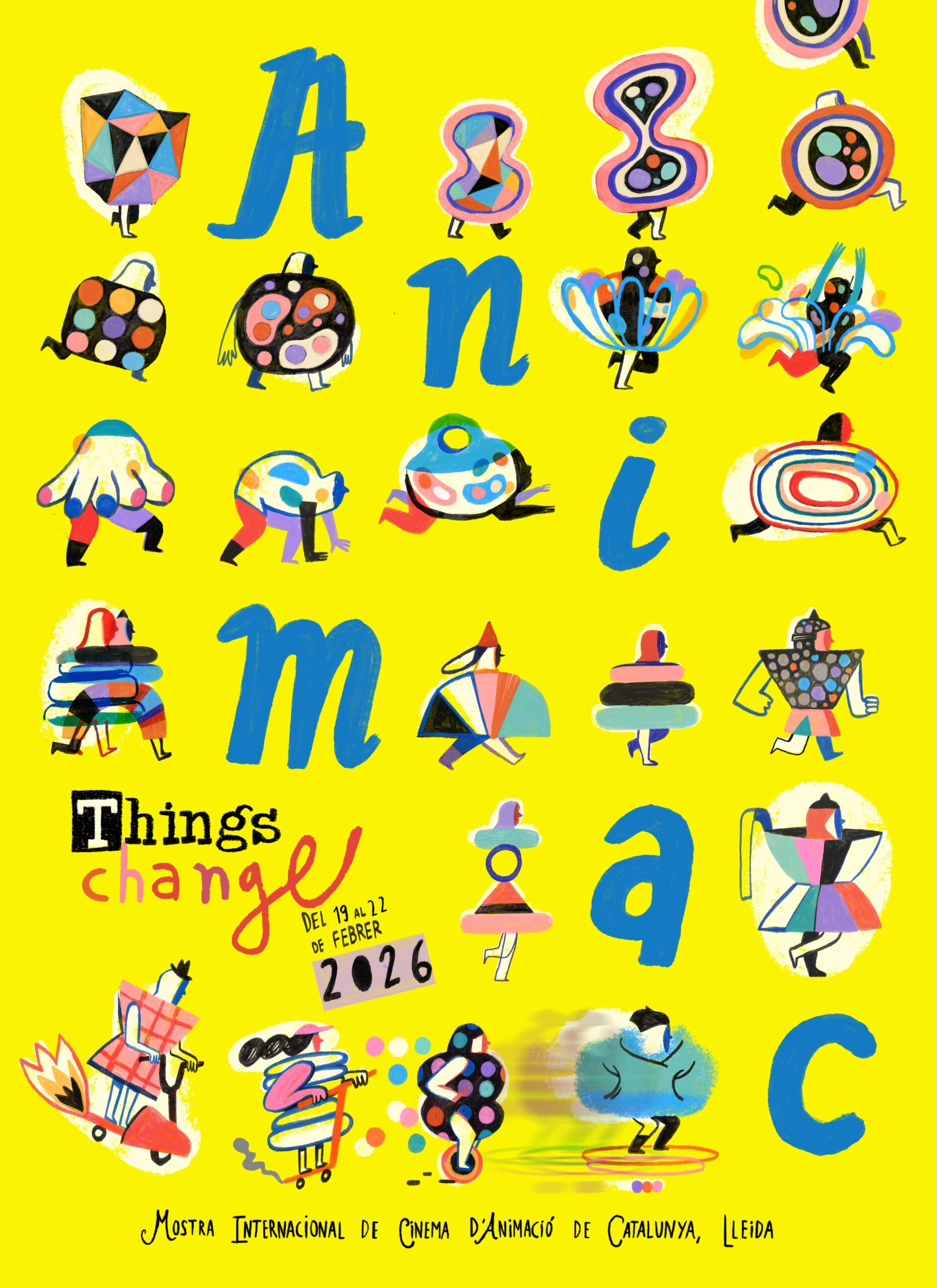
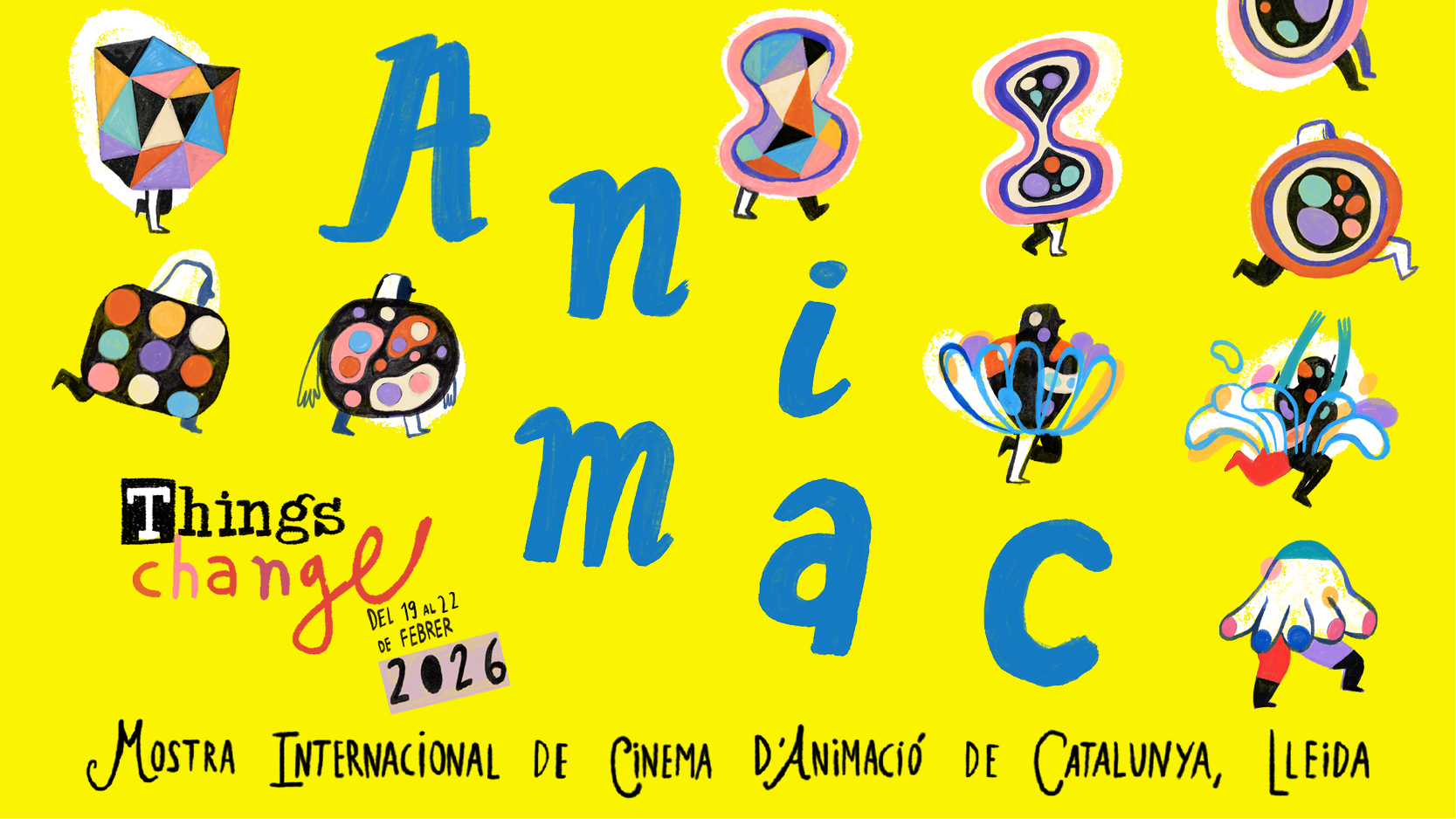
The poster for Animac 2026 again bears the signature of Rocío Álvarez, a regular artist in the latest editions of the exhibition. His proposal accompanies the spirit of this year’s motto and offers a personal look at the concept of transformation. As the author explains, “this year’s theme, Things Change, is practically infinite if we think about the evolution of the human being, both biologically, culturally, politically, technologically or ecologically. On all these fronts, things change, evolve.”
Álvarez points out that this context of accelerated change made it difficult to condense it into a single image. Finally, he has chosen to “create an animated sequence in which a character embodies change in his own structure: from stardust, to the cell, to the plant, to the first utensils created by humans and to the technological race in displacement.” A metamorphosis represented with a poetic and subjective freedom that does not seek to conform strictly to the historical chronology.
According to the author, the letters of Animac “also travel throughout the poster, distributed in space and accompanying the transmutation of the character”, while the choice of colors aims to “invite calm but also optimism”.
Animac 2026 has received 759 entries from 85 countries, a figure that consolidates the sustained growth of recent years and reinforces the international nature of the Exhibition. Registrations have gone from 562 films in 2024 to 721 in 2025, reaching 759 this year; and territorial diversity continues to expand, with an evolution of 53 countries in 2024, 71 in 2025 and 85 in this edition.
Europe leads the participation with 499 productions (65.7%), followed by Asia with 127 (16.7%) and North America with 86 (11.3%). Also present are Latin America (60 films), the Middle East (21), Oceania (5) and Africa (1).
As for the most represented countries, France leads the ranking with 118 titles (15.55%), followed by Spain (70, 9.22%), the United States (64, 8.43%), the United Kingdom (53, 6.98%) and Germany (45, 5.93%). Completing the “Top 10” are South Korea (34), Taiwan (27), Russia (24), Belgium (29) and Canada (22).
30 editions reinventing itself
In 2026, Animac reaches its 30th edition, three decades after being born within the Leandre Cristòfol Municipal Art School of Lleida and evolving to become a reference event for auteur animation cinema. The celebration of the anniversary will unfold throughout the Exhibition with various actions and commemorative content.
Animac has the support of CaixaForum Lleida, the Fundació de les Arts de Lleida, the Ministry of Culture (ICAA), the Provincial Council of Lleida (IEI) and the ICEC of the Department of Culture of the Generalitat of Catalonia.