



Michiyo Yasuda, the artist who gave color to Ghibli


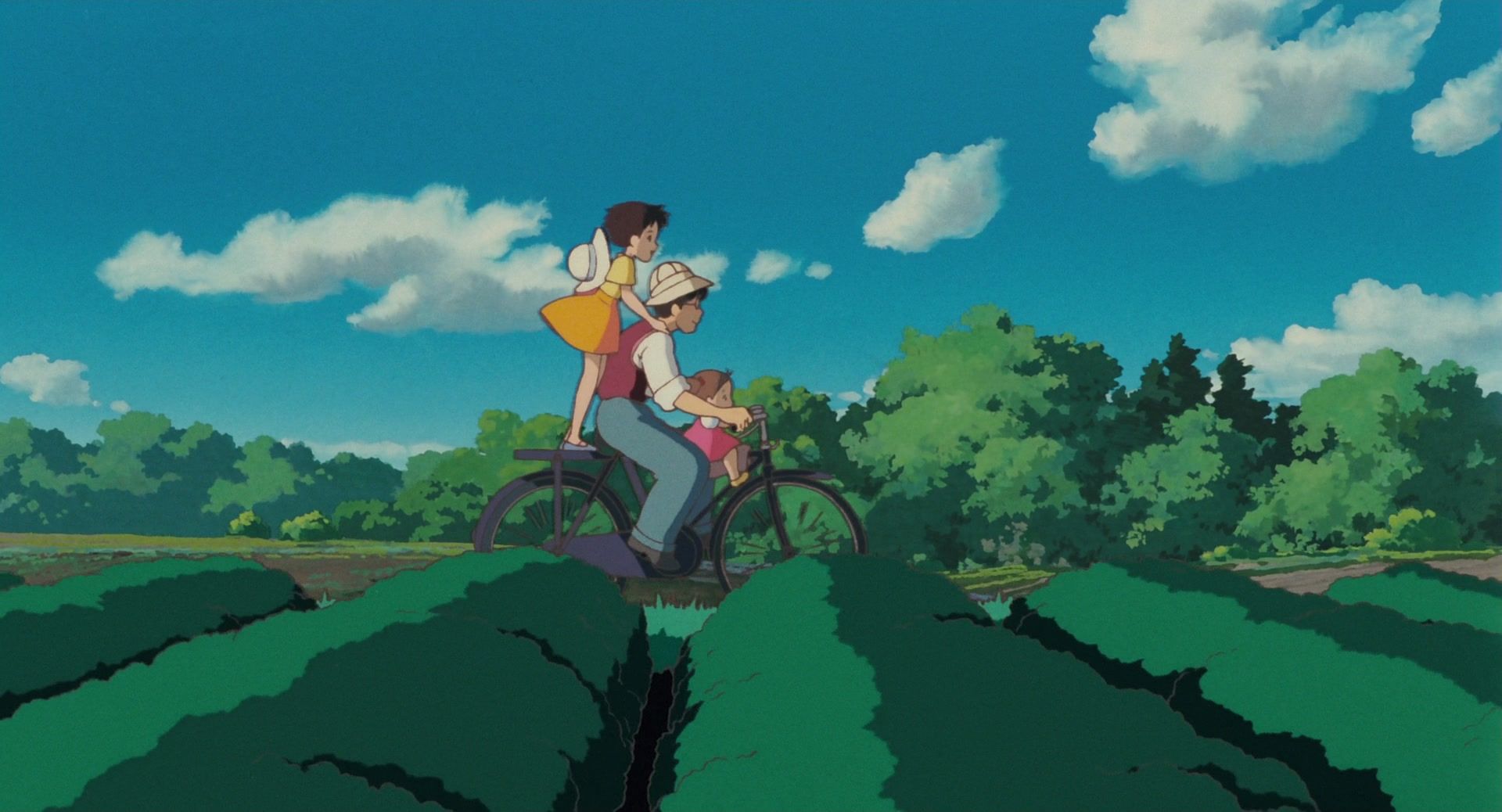
Ah, summer. That long-awaited moment to return to nature: lying in the field and contemplating the clouds, riding a bicycle, running through the grass or diving into crystal clear waters. We have seen all this, and much more, countless times in the films of Hayao Miyazaki and Isao Takahata. And we wanted to be there, because its images convey fantasy to us, but also an extraordinary sensation of reality.
In addition to his amazing narrative capacity and the spectacular animation of his films, there is another essential element to understand his visual power: color. Behind a good part of this chromatic universe is a true master, Michiyo Yasuda, a collaborator with Miyazaki and Takahata since long before the creation of Studio Ghibli and responsible for the color design of some of their most important works.
Thanks to the research work of the publication Animation Obsessive, we have been able to better understand this fundamental figure of an aesthetic that marked a before and after in the history of animation.
Color as a way of narrating
Michiyo Yasuda was born in Tokyo in 1939 and went to work at Toei Doga in 1958, having just finished his studies. It began in the plotting and painting department, where animators’ drawings were transferred and colored onto transparent sheets of acetate. There he met Isao Takahata and, a few years later, Hayao Miyazaki. The three began a professional and personal relationship that would last more than four decades.
Yasuda participated as a plotter in important scenes of Horus, Prince of the Sun (1968), directed by Takahata, and met again with both filmmakers in productions such as Panda, Little Panda and Heidi. However, his true specialization in color design began during the Marco, from the Apennines to the Andes series (1976), on which he worked closely with Miyazaki.
In that production they began to experiment with issues that may seem obvious to us today, but that were not common in television animation at the time: how to make food look appetizing, how to represent the shine of a glass, how the color of an object changes when seen underwater or through glass. Yasuda understood that choosing a color was not simply about filling in a surface. Color could express the texture of materials, the time of day, temperature, distance and even the emotional state of a character.
His work continued in Conan, the boy from the future (1978), by Miyazaki, and in Anne of Green Gables (1979), by Takahata. For the latter, Yasuda looked for a more naturalistic range than usual in Japanese television series. The faded clothes of the characters, worn fabrics and everyday objects acquired, through color, a material presence and a story.
Yasuda constantly observed the world around her. He could stop in front of a fallen leaf in a puddle to study how the light fell on it, observe the changing shadows of trees moved by the wind or see how a green and blue pattern became softer when viewed from afar. His palette was born from this patient attention to reality.
Make the fantasy believable
In Nausicaä of the Valley of the Wind (1984), Yasuda designed a range of more than 260 colors, luminous but not very saturated. Shortly after, with the founding of Studio Ghibli, he became head of its color department. For Castle in the Sky (1986), the studio’s first film, he created more than 300 colors and contributed decisively to establishing a color identity different from that of the rest of the industry.
His contribution became even more evident in My Neighbor Totoro and Tomb of the Fireflies, produced simultaneously in 1988. For both films he developed new intermediate tones, more subdued and natural. Faced with the strong and plastic colors that were beginning to dominate Japanese society, Yasuda sought greater delicacy.
In My Neighbor Totoro, the colors are soft, warm and silent. In The Grave of the Fireflies, they approach an austere naturalism. Takahata highlighted his ability to express even the thickness or wear of a fabric through color. Pants faded by many washes not only had a certain color: they also had a texture, a weight and a memory.
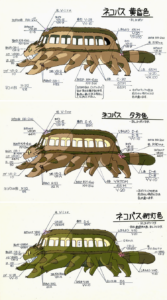
That attention to reality was equally important in Miyazaki’s fantastical worlds. Yasuda explained that the Catbus could not be pink or have an arbitrary color: it had to convey the warmth and physical presence of a real animal. Only in this way could the viewer accept that this impossible creature might really exist. Color was, therefore, a fundamental tool to make fantasy convincing.
His work can be found in films such as Nicky, the Witch’s Apprentice, Memories of Yesterday, Porco Rosso, Princess Mononoke, Spirited Away, Howl’s Moving Castle, and Ponyo on the Cliff. He also knew how to adapt to the transition from painting on acetate to digital coloring. When technology threatened to make images too flat and uniform, Yasuda looked for a way to preserve the smoothness, depth and vibrancy of traditional procedures.
There was no “Ghibli palette” for her that could be applied mechanically. Each film required starting over, researching its places, its time and its characters, and responding to the particular needs of each scene. His job was not to impose a recognizable personal style, but to give life to the drawings and make visible the directors’ intention.
Yasuda retired after Ponyo (2008), although she returned as a color consultant in The Wind Rises (2013). He died on October 5, 2016, at the age of 77.
His name continues to be much less known than those of Miyazaki and Takahata, but it is impossible to imagine his films without his gaze. When we see the wet green of a forest, the evening light on a house, the blue of a shadow or the faded dress of a character, we are also entering the world of Michiyo Yasuda: an artist who understood that color does not decorate images, but rather gives them air, matter, emotion and life.
Acknowledgments and source
This text has been written based on the valuable research published by Jules and John in Animation Obsessive: “The Artist Who Colored Ghibli”. Our gratitude to its authors for recovering and disseminating the work of Michiyo Yasuda and so many fundamental animation professionals whose contribution has remained out of the foreground for too long.